Start with the wine you want, not the size of the offer
A practical UK guide to choosing wine styles, reading bottle details and deciding between delivery and collection at Majestic Wine.
Affiliate disclosure: This article contains affiliate links. TweetSport may earn a commission if you make a qualifying purchase through them. We are the publisher of this guide, not the retailer, and orders are placed with Majestic Wine.
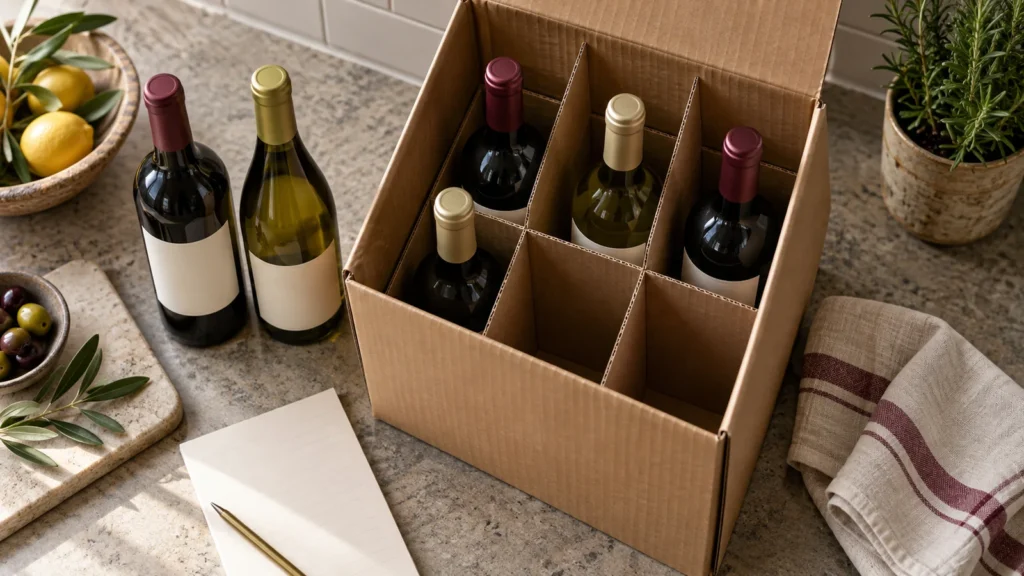
For adults aged 18 and over. This is a desk-researched buying guide, not a tasting report or a claim of first-hand shopping experience. Information was checked on 9 September 2026. The cover is an original AI-generated illustration of planning a mixed wine purchase, not a photograph of Majestic products or packaging.
Online wine shopping presents several decisions at once: the style, the bottle, the quantity and the route by which it reaches you. Treating these as separate questions makes a long catalogue more manageable. A retailer can have a suitable bottle but an unsuitable collection date; a mixed case can look convenient while containing a style you know you dislike.
Majestic is worth examining here because its website distinguishes local-store shopping from ordering through the wider website. That distinction matters as much as the wine description when you need to collect an order. This guide explains what to check without ranking individual bottles, awarding a retailer score or assuming that every shopper should buy a case.
Translate your preferences into useful wine descriptions
Start with characteristics you can describe without specialist vocabulary. Do you prefer a lighter or fuller texture? Something that feels fresh and mouth-watering, or softer and rounder? A dry style, or noticeable sweetness? Write down two preferences and one thing you wish to avoid. This gives you a more useful shopping brief than a request for an impressive label.
WSET distinguishes several elements of mouthfeel: acidity contributes freshness and mouth-watering, tannin can create a drying grip, and alcohol contributes warmth and weight. These are different sensations, so a wine described as fruity is not automatically sweet, and a drying sensation is not the same as an absence of sugar. Look for the retailer’s separate description of sweetness rather than guessing from fruit aromas. See WSET’s explanation of mouthfeel.
Red and white are useful first filters, not complete flavour descriptions. Within either colour, compare body, sweetness and the specific tasting note. If a description concentrates on richness when you want lightness, it may be an unsuitable choice even if the bottle has an attractive presentation. Do not treat stronger alcohol as a quality shortcut.
Use grape and region together
A grape name identifies a variety; a region tells you where the wine comes from. A product may feature one more prominently than the other. For each candidate, note both if the information is available, along with the producer and vintage. This helps you distinguish a familiar name from a genuinely similar bottle.
For example, if you have enjoyed a wine labelled Sauvignon Blanc, use that as a starting search term rather than an assurance that every Sauvignon Blanc will taste alike. Compare the actual notes on the bottles you are considering. If a regional name is unfamiliar, read the product description or ask the retailer which grapes and style it represents instead of inferring quality from the name alone.
Read the bottle details before comparing the price
Create a small shortlist rather than opening dozens of product pages. Record the following fields for each bottle; an unanswered question is a reason to check, not an invitation to fill the gap with a guess.
- Exact identity: producer, wine name, grape or blend, region and listed vintage.
- Quantity: bottle size, number of bottles and whether the displayed amount is a bottle or case price.
- Style: the stated sweetness and body, alongside the tasting description.
- Alcohol and ingredients information: read the ABV, allergen details and any dietary information relevant to you; do not infer suitability from colour or packaging.
- Availability: whether the exact bottle is available through the selected shopping route and whether the vintage shown can vary.
These checks are deliberately unglamorous. They prevent ordinary mistakes such as comparing different bottle sizes or treating two vintages as the same listed product. If the page shows alternative vintages, clarify which one you will receive when that distinction matters to your purchase.
Think about the food without turning pairing into a test
A useful food brief identifies the main dish, its sauce and whether it is notably rich, salty, sweet or spicy. Asking for a wine to accompany a creamy mushroom dish is more informative than asking for one to accompany “dinner”. Personal preference still matters: a theoretically tidy pairing is not useful if it gives you a style you already dislike.
WSET’s food-matching guidance emphasises personal taste rather than rigid rules. Its mouthfeel guide also explains why acidity and tannin can affect a pairing. Use those ideas to frame questions for the retailer, not as a promise that one bottle will suit everyone.
There is no need to organise a tasting or buy additional bottles simply to complete a comparison. You can narrow the choice from descriptions and ask for clarification before spending anything. An alcohol-free option should remain available for anyone who prefers it.
Compare a mixed selection with the purchase you actually planned
The Majestic catalogue shows both individual-bottle and Mix Six pricing on relevant listings. Eligibility and the amount payable need to be checked for the particular basket, rather than assuming every item shares the same conditions. Start with the current retailer catalogue and check the final basket.
Make your original budget the reference point. First list the bottles you intended to buy without looking at any threshold. Then compare the total for that purchase with the total for a mixed selection, including delivery or the practical cost of collecting. Keep the bottle count and sizes visible beside the amount.
A six-bottle selection may be convenient if six bottles were already part of a considered purchase, but it is not the default answer for someone who wants one. Do not add unwanted wine to reach a discount or delivery threshold. For a planned mixed order, avoid filling every slot with an unfamiliar style merely to make the selection varied; include only products you have a reason to choose, and check that you can store them appropriately.
If a case contains a bottle you would otherwise reject, its inclusion belongs in the comparison. The relevant question is not “how many bottles do I get?” but “does this purchase fit my preferences and budget without unnecessary extras?” Buying fewer bottles, collecting locally, using a different retailer or deciding not to purchase are all reasonable outcomes.
Majestic delivery and collection: check which route you selected
At the time of checking, Majestic’s delivery page described four routes:
On a narrow screen, scroll the table sideways to read all three columns.
| Route | Published indication | Check before paying |
|---|---|---|
| Shop Local & Collect | Local stock; same-day collection for eligible orders placed by 3pm. | Your selected store’s stock, hours and collection confirmation. |
| Shop Local & Deliver | Local-store delivery, generally indicated as 2–7 days. | Postcode coverage, availability and arrangements with the store. |
| Shop Website & Collect | Website orders indicated as ready for collection within 7 days. | Readiness notification rather than assuming immediate store stock. |
| Shop Website & Deliver | Standard delivery plus next/nominated-day options. | The basket’s charge, eligible dates and postcode exceptions. |
These are published indications, not a delivery promise from TweetSport. Some postcodes have longer lead times, and weather can affect service. Check the current checkout for charges and eligibility; the site does not generally offer delivery outside the UK. Do not travel to collect until the order is confirmed ready.
Decide whether this retailer fits your purchase
A potentially useful fit: you want to compare a selection of wine styles and can use a convenient collection point, or you are already planning a mixed order and want to assess its final basket cost. The practical value depends on the particular bottles and service route available to you.
Reasons to look elsewhere or buy less: you only want a small purchase that does not justify the total delivery cost, your chosen bottle is not available through the route you need, or you require a collection date that has not been confirmed. This is not an assessment of every UK wine retailer, so it should not be read as a claim that Majestic is universally cheaper or more suitable.
If something is wrong with an order, consult Majestic’s current terms and conditions and contact the retailer. Do not assume that a general returns statement covers every product or transaction: subscriptions, event orders and other specialist purchases can have different conditions. We have not tested the returns process.
Check Majestic’s current wine range
Affiliate link · Opens the retailer, where you can verify products, availability and the final order total.
Your final check before buying wine online
- Does the wine’s described style match your preferences, rather than just an appealing label?
- Have you checked the exact bottle, size, ABV and relevant allergen information?
- Does the complete basket fit the budget you set before looking at promotions?
- Are you buying only what you intended, rather than adding unwanted bottles?
- Is your chosen delivery or collection route available for the relevant postcode and date?
- Have you read the retailer’s purchase and returns conditions?
A considered choice can be a smaller order or no order at all. This guide is for adult purchasing decisions, not a recommendation to drink more or a claim that alcohol improves health, confidence or sporting performance.
About this guide and its sources
Prepared for TweetSport’s UK readers using publicly available retailer information and WSET educational resources, checked on 9 September 2026. No bottles were bought or tasted for this article, no delivery or collection was trialled, and no numerical rating has been assigned. Product availability and retailer terms can change after this date.
- Majestic Wine UK catalogue — product identification and displayed purchasing options.
- Majestic delivery information — shopping routes, collection indications and delivery limitations.
- Majestic terms and conditions — purchase requirements and transaction-specific conditions.
- WSET: The secret language of wine — mouthfeel — wine structure and sensory vocabulary.
- WSET: Wine food matching essentials — personal preference and food-pairing principles.